Editorial
Next July, the United States will celebrate the 250th anniversary of its Declaration of Independence—a text that not only founded a nation but also marked a decisive turning point in modern intellectual and political history. Few institutions embody this legacy more than Harvard. John Hancock, Samuel Adams, John Adams: these Founding Fathers, educated within its walls, drew upon the ideas of the Enlightenment that shaped the principles of liberty, representation, and self-governance.
Yet this history is, from its very origins, profoundly Franco-American. Without France, without the commitment of Lafayette, without the Parisian salons where philosophers and revolutionaries exchanged ideas, would American independence have taken the same form? From Yorktown to the banks of the Seine, this transatlantic dialogue forged an intellectual and political alliance whose fruitfulness endures to this day.
It is within this tradition that the Harvard French Review finds its place. Our mission remains simple: to serve as a transatlantic, bilingual, and interdisciplinary crossroads where the great questions of our time—intellectual, scientific, economic, legal, or political—converge. Here, students, researchers, policymakers, writers, and scientists share a common conviction: mutual understanding between France and the United States begins, above all, with the exchange of ideas.
This edition bears vivid testimony to that mission. We are honored to feature contributions from leading figures such as Philippe Aghion, Stephen Breyer, Brune Poirson, Michel Devoret, Antoine Compagnon, and Virginie Greene, whose work and careers embody the intellectual excellence and spirit of openness that animate our journal. We also extend our sincere gratitude to Anne Dias for her commitment to the Review, as well as to the Harvard Club of France for its renewed support.
Like every issue, this one is the fruit of collective effort by Harvard students and alumni, united by a shared demand for rigor and a deep attachment to dialogue across disciplines, cultures, and generations. At a time when Western democracies are questioning their institutions, cohesion, and future, we hope these pages will contribute—with humility but determination—to a conversation that is essential between our two nations.
Luc Hillion & Paul Finck
Editors in Chief
2025 Editorial
October 1784. At just twenty-six, Gilbert du Motier, Marquis de La Fayette, was awarded an honorary Doctor of Laws from Harvard University. Likely the first French citizen to forge a bond with the United States’ oldest institution of higher learning, La Fayette—hero of both the American and French Revolutions—opened a path that generations of French students have continued to follow ever since.
For nearly four centuries, Harvard has embodied a distinct vision of collective achievement, shaped by diversity and driven by excellence. It is within this tradition that the Harvard French Review finds its purpose: to spark ideas, renew perspectives, and foster dialogue between France, the United States, and the broader world. That purpose rests on three guiding principles:
— Bilingualism, to be accessible to readers on both sides of the Atlantic, and beyond;
— Neutrality, to provide a space for open dialogue, free from partisan constraints;
— Interdisciplinarity, to engage with ideas across political science, economics, law, sociology, and other fields of thought.
Yet these principles would mean little without the dedication of a team committed to embodying them. This Review is a collective endeavor, brought to fruition by students and graduates from across Harvard’s schools, united by curiosity, intellectual rigor, and a shared commitment to dialogue. Under the generous and thoughtful guidance of Fabrice Seiman, co-founder of the Review, our team has earned the trust of some of the most respected voices in the Franco-American intellectual landscape.
We are honored, in this issue, to feature contributions from Édouard Philippe, former Prime Minister of France; Hubert Védrine, former Minister of Foreign Affairs of France and a leading voice in international affairs and Annie Ernaux, recipient of the 2022 Nobel Prize in Literature—alongside many other distinguished contributors, to whom we extend our sincere thanks. Our gratitude also goes to the Harvard Club of France and Français du Monde, whose enduring support and belief in transatlantic exchange continue to shape and strengthen our work.
This issue is the product of a shared, transcultural endeavor and perhaps, a sign of a new chapter in the long and fertile story of Franco-American relations. Through the range of voices it brings together—French, British, Chinese, Belgian, Swiss, Canadian, Moroccan, and Ghanaian—it also reflects something of the intellectual and human diversity that defines Harvard itself. May it play its part, however modest, in carrying that story forward.
Antoine Beaury & Maksens Djabali
Editors in Chief (2025)
The founder’s note
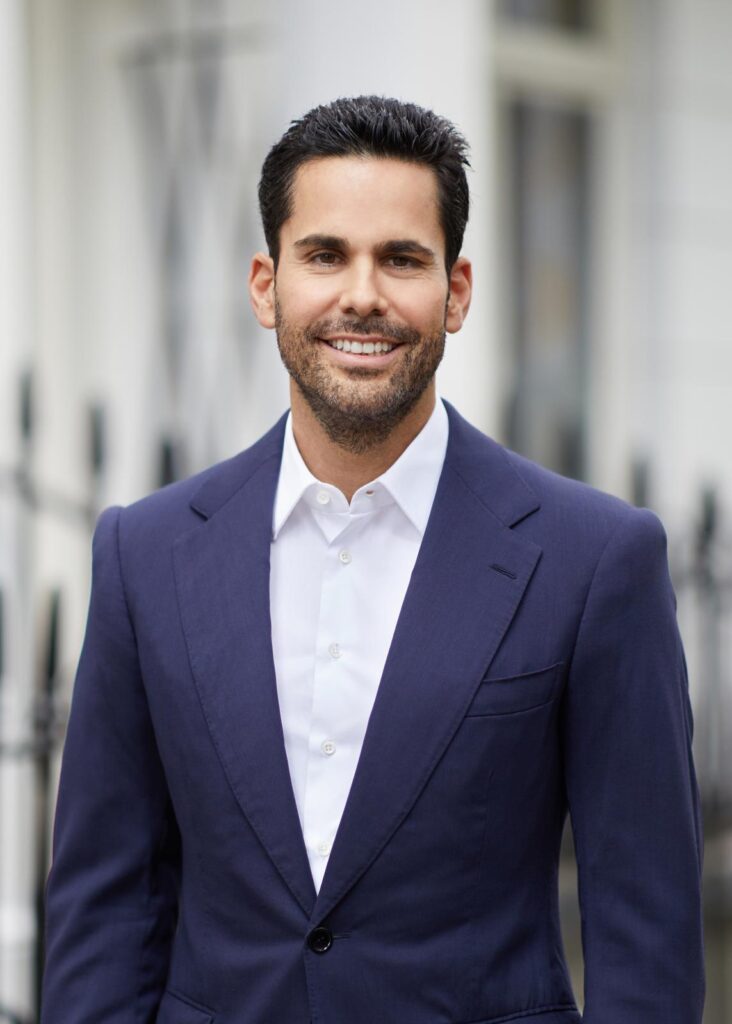
Twenty years. Twenty years already. For two decades, our project has been driven by a single conviction: ideas precede history and shape its course. As the world bends under the weight of multiple crises, as certainties crumble and fears resurface, transatlantic dialogue has never been more essential. It is, in fact, vital.
When the Harvard French Review was founded in 2005, it answered a need: to create a space of intellectual freedom where the great voices of our time could engage with the young researchers of today—those who will shape the world of tomorrow. In this laboratory of ideas, where visions clash and perspectives evolve, free spirits have relentlessly questioned the present, challenged dogmas, and reimagined the realm of possibility.
Two decades later, this ambition remains as urgent as ever. We live in an age of upheaval—a moment when democracies falter, technology reshapes the very fabric of politics, and cultural divides deepen. Understanding what is at stake, anticipating what lies ahead, and forging new paths—without complacency, without compromise—this is the responsibility we will continue to uphold.
This anniversary edition is not merely a retrospective but a gateway to the future. What new equilibrium will emerge between Europe and America? How can we reinvent democracy in an age of artificial intelligence and all-powerful algorithms? What role will culture play in a world where information is fractured and truth contested?
History doesn’t repeat itself; it hesitates, stumbles, accelerates. Twenty years of debate, commitment, and shared ideas. Twenty years of a Review that, in every era, has captured the pulse of its time. Now, it is up to you to write the next chapter—let reason and freedom resonate on both sides of the Atlantic.
Fabrice Seiman
Co-founder