
Evrard Constant—Master of Science in Aeronautics and Astronautics, MIT, Class of 2026.
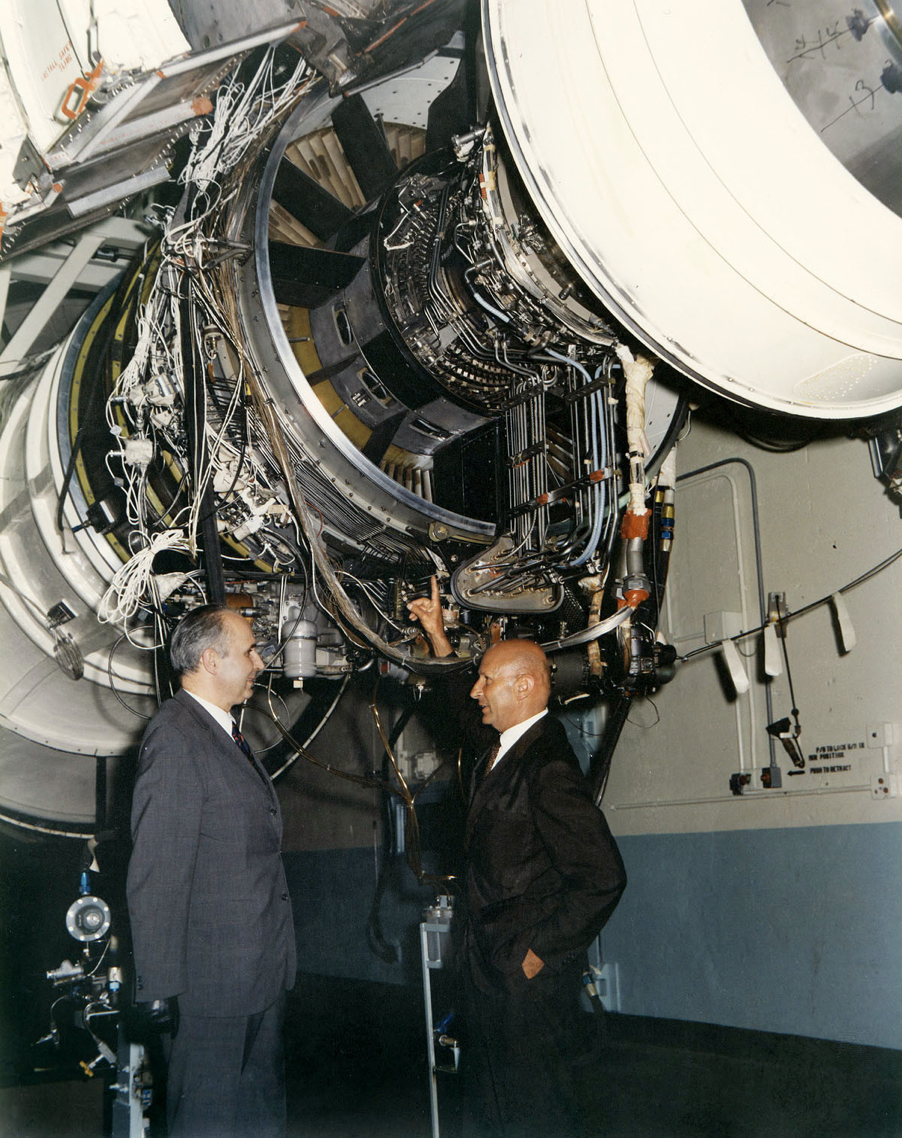
At first glance, a commercial aircraft is recognized by the sculpted profile of its nose, the elegance of its wings, and the distinctive airline livery. The aviation industry could therefore be reduced to the aircraft manufacturers and the long-standing rivalry between Airbus and Boeing. Yet beneath the wings lies another industrial arena, shaped by a different set of global players whose technologies largely determine an aircraft’s performance, efficiency, and operational capability.
An aircraft engine is among the most complex engineering systems ever developed, requiring extraordinary reliability while enduring extreme temperatures and immense mechanical stresses. The critical nature of this technology is reflected in the economics of aviation itself: although modern engines account for less than 15% of an aircraft’s operating empty weight, they represent nearly 80% of the aircraft’s value at end-of-life.2 Beyond its economic value, mastering aircraft engine technology is a matter of strategic importance. The ability to design and manufacture military aircraft engines grants a nation autonomous power-projection capability, free from dependence on foreign suppliers. Such expertise also provides a powerful tool in geopolitical negotiations, while strengthening domestic high-technology industries. For these reasons, aircraft engine expertise remains closely guarded, and the circle of countries mastering the technology has remained largely unchanged since the Second World War.
However, if there is one technological partnership between France and the United States that has proven both enduring and remarkably successful, it is in the field of aircraft engines. Over fifty years, General Electric Aerospace (GE) and what is now Safran Aircraft Engines joined forces through CFM International to create one of the greatest success stories in the history of commercial aviation propulsion.
To understand this industrial achievement, we must go back more than fifty years, when an improbable alliance took shape, bringing together a symbol of American capitalism with a French state-backed industrial apparatus. Under President Pompidou, France’s Société Nationale d’Études et de Construction de Moteurs d’Aviation (Snecma) was already an established industrial force. Founded in 1945 through the nationalization of Gnome et Rhône under General de Gaulle, the state-owned company had been built with a strategic purpose: developing an autonomous national capability in aircraft engine design and production. By the late 1960s, its expertise remained primarily rooted in military propulsion, particularly through the development of the ATAR turbojet series that powered Dassault Mirage fighter jets. The company had also begun to carve out a presence in the separate field of civil aviation, notably through its collaboration with Bristol Aero Engines, later absorbed by Rolls-Royce in 1966, on the Olympus 593 turbojet that powered the Concorde.3
Across the Atlantic, General Electric had accumulated significant experience in the military engine market. Technologically, GE held a clear lead in jet propulsion, driven in large part by the intense research and development efforts of the Cold War era. The company had notably developed the core of the F101 engine, a major technological innovation that powered the B-1 strategic bomber.4 GE had already collaborated with Snecma on the commercial CF6 engine, which equipped aircraft such as the Airbus A300. Meanwhile, its American counterpart, Pratt & Whitney, dominated the civil aviation market at the time, particularly the narrow-body segment with the JT8D engine. By the early 1970s, however, this engine was beginning to show its age, featuring a low-bypass design rooted in 1960s technology, while higher-thrust engines were already benefiting from a new generation of technological advances. A gap was opening in the market for a new generation of short- to medium-haul aircraft engines, offering higher thrust with a high-bypass ratio architecture delivering reductions in both noise and fuel consumption.5
A partnership between General Electric and Snecma was compelling for several reasons. Both companies recognized the need for a competitor to the JT8D, while the cost of such a program made the pooling of financial and industrial resources attractive. Furthermore, the two manufacturers had already established a working relationship through their previous collaboration on the CF6 program.
Nevertheless, before such a partnership could become a reality, significant technological and political barriers had to be overcome. GE and Snecma agreed in 1972 to jointly develop a 10-ton-thrust high-bypass-ratio engine leveraging technology derived from the F101 core. For the project to succeed, GE would need to export its advanced high-pressure core technology to France for integration with the rest of the engine. The company’s initial request to the Department of State, led by Kissinger, was denied amid concerns that transferring such advanced propulsion technology could compromise national security interests.6
Where technological rationale fell short, political cooperation carried the project forward. President Pompidou made the matter a personal priority, pressing his case directly with President Nixon at the 1973 U.S.-French summit in Reykjavik and securing agreement on the technology transfer in exchange for concessions.7 One year later, General Electric and Snecma finally signed the agreement formally establishing CFM International as a 50/50 joint venture. The company’s name itself reflected the partnership, combining GE’s commercial turbofan designation, “CF,” with Snecma’s original engine proposal, the M56. The workshare reflected the complementary strengths of the two companies: GE assumed primary responsibility for the engine core, while Snecma took charge of the low-pressure system, leveraging its expertise in that field. This balanced division of responsibilities continues to define the partnership to this day.
The partnership had begun, but suspicion remained strong. Although the high-pressure core technology was transferred to France, only limited technical knowledge was shared. GE employees were provided with a secure workshop within Snecma’s facilities, to which Snecma personnel themselves had no access. At the time, the partnership between these two industrial powers relied on personal trust and mutual respect between two engineers.8
Gerhard Neumann, head of GE’s Aircraft Engine Business Group, met René Ravaud, CEO of Snecma, for the first time at the 1971 Paris Air Show. The connection between the two Second World War veterans was immediate: “He and I clicked from the very first moment we met,” Neumann later recalled.9
Neumann, a German-born Jew, left Germany in 1939 and later joined the U.S. volunteer flying group in China nicknamed “The Flying Tigers” to fight against Japanese forces.10 Among his many exploits, he assembled an airworthy Zero fighter jet from wreckage parts enabling Allied forces to identify its weaknesses in combat. Upon returning to the United States, he benefited from a special act of Congress that granted him citizenship, after which he steadily rose through the ranks of General Electric. A true mechanical visionary, Neumann helped pioneer at GE the variable compressor stator vane, a technology capable of adapting to changing airflow and dramatically improving engine performance. By 1971, he had in mind what could become a transformative engine, yet he understood that success would require a partner.
Ravaud embodied the French tradition of state engineering: a graduate of the École Polytechnique and a senior official entrusted with planning the nation’s major defense programs. At the time of liberation of France, he was gravely wounded in the 1944 bombing of the city of Brest, resulting in the loss of his right arm, an injury that left him permanently disabled.11 For his bravery, he was awarded two of France’s highest distinctions: the Croix de guerre and the Légion d’honneur. When Neumann and Ravaud first met, despite the language barrier, their strong native accents, and their cultural differences, each recognized in the other a man who had faced the war in its most brutal form—a kindred spirit united by a shared passion for technology and industry. This friendship endured through the design and certification of the first turbofan developed by the joint venture: the CFM56.
After eight years of development, CFM International successfully achieved certification of the CFM56 engine. For the first time in aviation history, an engine had been jointly certified by both the American and the European regulatory agencies.12 Technologically, it delivered what the industry demanded: an engine that was more reliable, quieter, and more fuel-efficient than any engine previously offered. Yet despite these strengths, sales proved difficult to secure, and the future of the program came close to being put on hold.
It was in this context that Neil Armstrong, best known as the first man to walk on the Moon, but also a highly accomplished aeronautical engineer, played a decisive role.13 As a board member at United Airlines, he led the technical evaluation of competing engine options for the airline’s DC-8 fleet. Known for his rigor and attention to detail, Armstrong engaged deeply with the engineering aspects of the CFM56 and selected it for the re-engining program.
This marked the beginning of the commercial success of the CFM56, which became, some twenty years after its entry into service, the best-selling engine in the history of commercial aviation. The engine still powers the Airbus A320 family and Boeing 737 aircraft today. The success of CFM International profoundly reshaped the competitive landscape of commercial aviation. Before its creation, GE Aerospace and Snecma were largely absent from the single-aisle engine market, which had long been dominated by Pratt & Whitney. By joining forces, the two companies emerged as the dominant player in the sector, with its engines powering approximately 72% of the global narrow-body fleet, compared with roughly 25% for Pratt & Whitney.14
By the early 2000s, the CFM56 was already a remarkable commercial success. Rather than resting on this achievement, CFM International set out to develop a new generation of engines with significantly lower fuel consumption. The strategy relied on major technological advances: ceramic matrix composites in the high-pressure turbine to improve thermal efficiency and advanced 3D-woven carbon fiber composite fan blades, which are lighter, stronger, and more aerodynamically refined, enabling a higher bypass ratio and improved propulsive efficiency. The program was named LEAP, standing for Leading Edge Aviation Propulsion. In the meantime, Pratt & Whitney sought to compete with the geared turbofan, an elegant architecture in which each component operates at its optimal rotational speed. The engine family, called PW1000G, featured an innovative design with a significantly reduced number of parts, simplifying maintenance. The emergence of advanced numerical simulation capabilities15 also transformed the engine development landscape, an approach that Pratt & Whitney embraced in the design. In the end, however, following a series of reliability challenges affecting this program, CFM International ultimately prevailed commercially. Its success rested on a development philosophy rooted in proven engineering principles, industrial robustness, and a disciplined culture of cooperation inherited from the original CFM56 partnership.
The engine is available in three variants: the LEAP-1A and LEAP-1B, developed for the traditional customers: respectively Airbus (for the A320neo) and Boeing (for the 737 MAX), and a third version, the LEAP-1C, designed for the C919 produced by the emerging Chinese manufacturer COMAC. This third variant reflects a broader turning point in the aviation landscape during that period, marked by the emergence of a new player determined to narrow the technological gap with Europe and the United States in advanced aerospace technologies. The success of the LEAP was immediate: strong reliability, a 15% reduction in fuel consumption compared to the previous engine generation,16 and the support of an extensive global maintenance network confirmed its commercial viability. By 2025, with over 1,800 engines delivered in a single year, the LEAP had become the world’s most delivered commercial aircraft engine annually.17
Cooperation between the two nations not only endured, but ultimately succeeded.
And what comes next? After decades of accumulated success, one might assume that the time has come to consolidate past achievements. Yet such an attitude runs counter to the pioneering spirit of the Franco-American cooperation.
Driven by the objective of achieving net-zero emissions in aviation by 2050,18 CFM International has entered a new phase of innovation. In 2021, the partners extended their joint venture agreement until 2050, reaffirming their commitment to developing a new generation of propulsion systems aligned with these environmental ambitions. The conclusion is clear: the turbofan architecture that has defined commercial aviation since the 1950s must now be fundamentally reimagined to unlock further gains in fuel efficiency. Moreover, improvements limited to engine consumption itself are no longer sufficient. The entire value chain, from fuels and materials to manufacturing and operations, must become more sustainable and resilient in an increasingly constrained and uncertain world.
In aircraft engine design, innovation builds upon established first principles. Increasing the fan diameter improves propulsive efficiency and reduces fuel consumption, but it also comes at the cost of increased weight and nacelle drag. The paradoxical response to break free from the trade-off is to remove the nacelle and push the bypass ratio to its limit. The result is an architecture that bears a striking resemblance to a technology that aviation has relied upon since the earliest days of jet propulsion: the turboprop. This is the direction CFM International has chosen with its RISE program: pursuing the radical open-fan architecture.
Yet this evolution raises significant technical challenges. The nacelle plays a critical role in attenuating engine noise and in controlling the local flow field around the fan blades to increase efficiency. Removing the nacelle allows the use of large, exposed blades (early designs feature blade lengths of over 1.6 meters),19 capable of accelerating greater masses of air at lower velocity, but it also introduces major structural and safety concerns. One of the key certification requirements is the blade-off containment demonstration, which ensures that a blade failure remains contained and does not penetrate the fuselage, thus protecting passengers and the aircraft structure. Several approaches are being explored to mitigate these risks for the open-fan architecture. Advances in materials aim to improve structural resistance and reduce the probability of failure, while reducing fan rotational speed lowers centrifugal loads and blade stresses. In the event of a blade failure, the energy released is then significantly reduced. This approach can be implemented through a reduction gearbox between the low-pressure turbine and the fan, allowing each to operate at its optimal speed while maintaining lower fan rotational speeds.
The RISE engine is designed to operate on 100% Sustainable Aviation Fuels (SAF). SAF refers to alternative aviation fuels produced from renewable or low-carbon sources such as biomass, waste oils, or synthetic fuels, and can significantly reduce lifecycle CO₂ emissions compared with conventional kerosene. Such fuels have been in development for several decades, initially driven by energy security concerns and more recently by the need to reduce the environmental impact of aviation. However, the main challenge that remains is cost. SAFs are produced at limited scale in aviation and therefore do not yet benefit from significant economies of scale. As a result, they are typically three to five times more expensive than conventional Jet-A fuel.20
Lastly, the RISE concept also leaves room for electrification, which has faced major limitations in aviation. Electric propulsion systems scale unfavorably; in current technologies, increasing power often results in disproportionate increases in system mass. For this reason, electrification in air mobility is currently being driven primarily by drones and electric air taxis, which require relatively low power levels, typically on the order of a few hundred watts for drones, and around 1 to 3 MW for electric air taxis. By contrast, single-aisle aircraft typically require propulsion power of tens of megawatts, while long-haul aircraft demand up to 100 MW, making electrification far more challenging for these cases. The RISE program does not aim for full electrification. Instead, it incorporates a hybrid architecture in which electric assistance enables onboard power generation and conversion, leading to additional fuel savings. Testing is currently underway, and the first flight demonstrations are expected by the end of the decade, with the objective of achieving a 20% increase in fuel efficiency compared with current-generation engines.21
Even today, the United States and France continue to exhibit cultural differences and divergent worldviews, particularly in their approaches to engineering challenges and their relationship with technology. Despite these differences, shared ambitions, pragmatic agreements, and a commitment to sustained dialogue have fostered enduring collaborations. The longstanding partnership between Snecma, now Safran Aircraft Engines, and General Electric Aerospace stands as a remarkable illustration of such cooperation. At times when dialogue becomes strained and mutual understanding begins to fade, it is worth remembering that the challenges of the past were no less daunting, yet cooperation between the two nations not only endured, but ultimately succeeded.
The author gratefully acknowledges those who inspired his passion for aerospace propulsion, both in France and in the United States.
Published May 17, 2026
Technical Glossary
- Bypass ratio: ratio between the airflow bypassing the engine core and the airflow passing through the core.
- Core: central part of a gas turbine engine containing the compressors, combustor, and turbines that generate power.
- Gearbox: mechanical component in a turbofan engine that decouples rotating parts, allowing each to operate at its optimal speed.
- Nacelle: outer housing surrounding an aircraft engine.
- Propulsive efficiency: measure of how effectively an engine converts power into useful thrust.
- Thermal efficiency: measure of how efficiently an engine converts fuel energy into mechanical power.
- Turbofan engine: jet engine using a large fan to generate thrust through both the core flow and bypass airflow.
- Turboprop engine: gas turbine engine that drives an aircraft propeller.
- Safran, “Media Library Patrimoine.”
- David Griffin, “The Influence of Engines on Aircraft Values,” Flight Ascend Consultancy, 2018.
- Safran, The Story of Safran Aircraft Engines – From 1945 to 2005, 2024.
- David Burigana, “L’accord SNECMA/General Electric et les origines de CFM International. Succès ‘global’ franco-… ou euro-américain ? Les dessous diplomatiques d’une affaire techno-industrielle,” Histoire, économie & société, 2010.
- Jean Bilien and René Matta, “The CFM56 Venture,” AIAA Aircraft Design and Operations Meeting, 1989.
- National Security Decision Memorandum 189, September 19, 1972.
- National Security Decision Memorandum 220, June 4, 1973.
- Christine Boynton and Guy Norris, “Check 6 Revisits: Engine of Change – 50 Years of CFM,” Aviation Week, 2024.
- Jay Stowe, “Extraordinary Together: GE Aerospace and Safran Aircraft Engines Celebrate 50th Anniversary of CFM International,” GE Aerospace, 2024.
- GE Aerospace, “Celebrating an Aviation Giant: How ‘Herman the German’ Helped to Propel the Aerospace Industry,” 2017.
- Félix Torres, René Ravaud, une vie pour l’industrie, First éditions, 2020.
- Safran, The Story of CFM International, 2023.
- Rick Kennedy, “How Legendary Astronaut Neil Armstrong Helped Launch the CFM Engine,” GE Aerospace, 2019.
- AeroTime Editorial, “Pure Power: The World’s Largest Aircraft Engine Manufacturers,” AeroTime, 2025.
- Jeffrey Burt, “Pratt & Whitney Developing High-Performance Computing Environment for Jet Engine Design,” 2018.
- CFM International, “The LEAP Engine Family.”
- Douglas Royce, “Safran Revenue Up 15% in 2025, LEAP Deliveries Surge 28%,” 2026.
- IATA, “Our Commitment to Fly Net Zero by 2050,” 2021.
- Omar Memon, “What Is CFM RISE? Inside GE and Safran’s Open Fan Engine for Net-Zero Aviation,” Aerospace Global News, 2025.
- Shawei He et al., “Fueling the Future: A Comparative Analysis of Sustainable Aviation Fuel Pathways,” Transport Policy 174, 2025.
- Dianna Delling, “5 Things to Know About the CFM RISE Program,” GE Aerospace, 2024.